
COTS Inaugural Workshop!
Soft Tissue Pitfalls in Tibial Plateau Fractures:
A Successful Hands-On Workshop in St. John’s
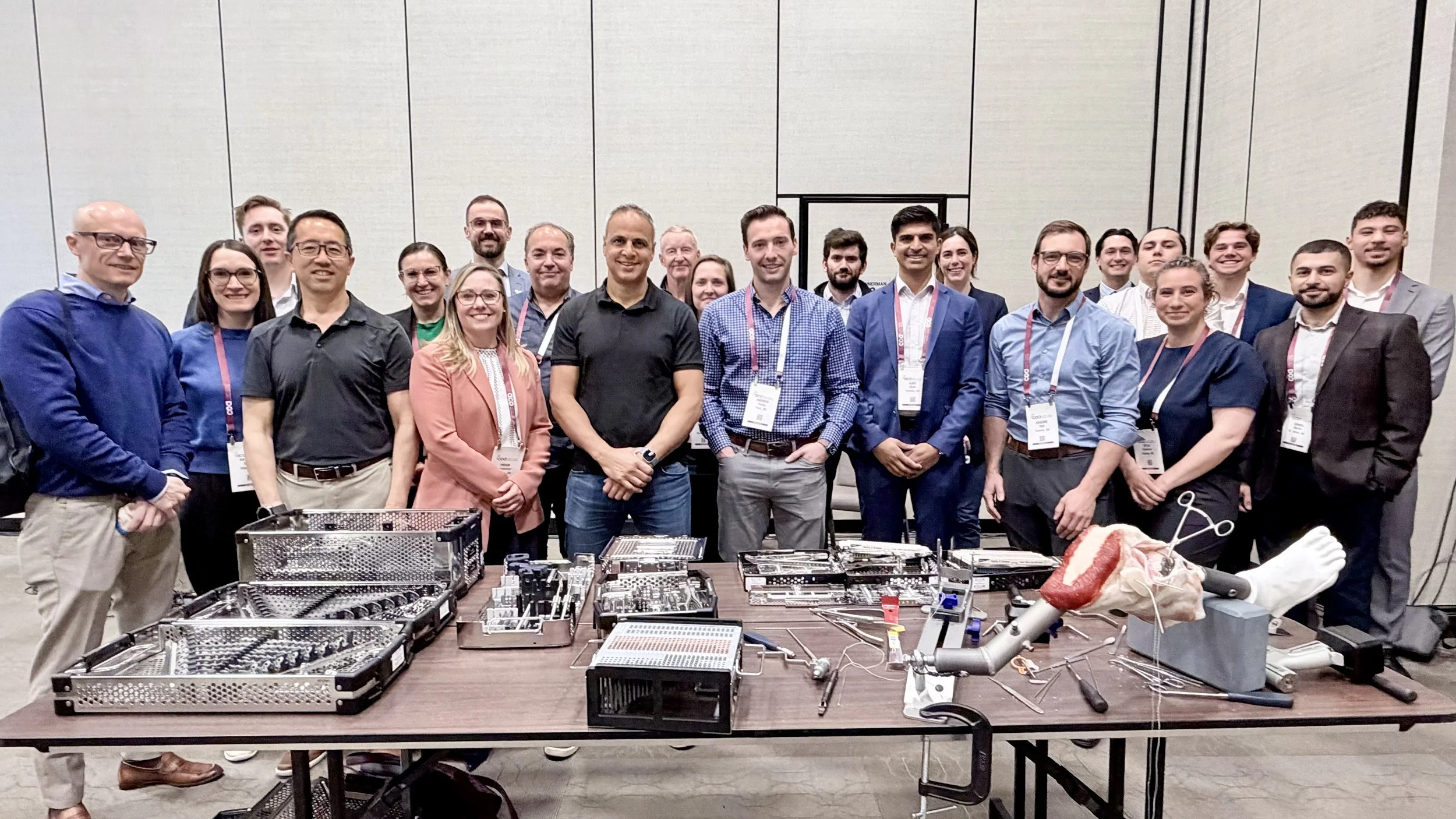
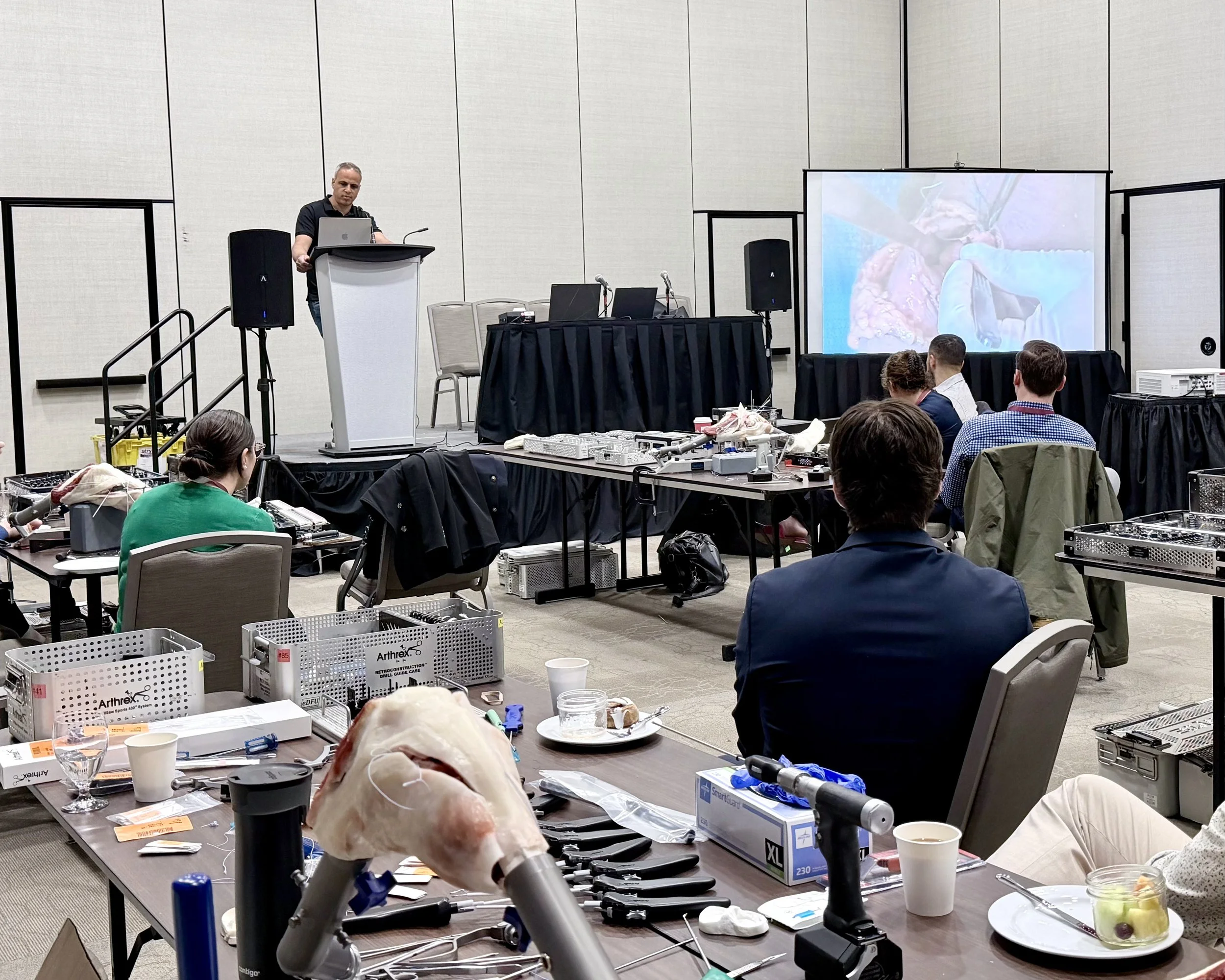
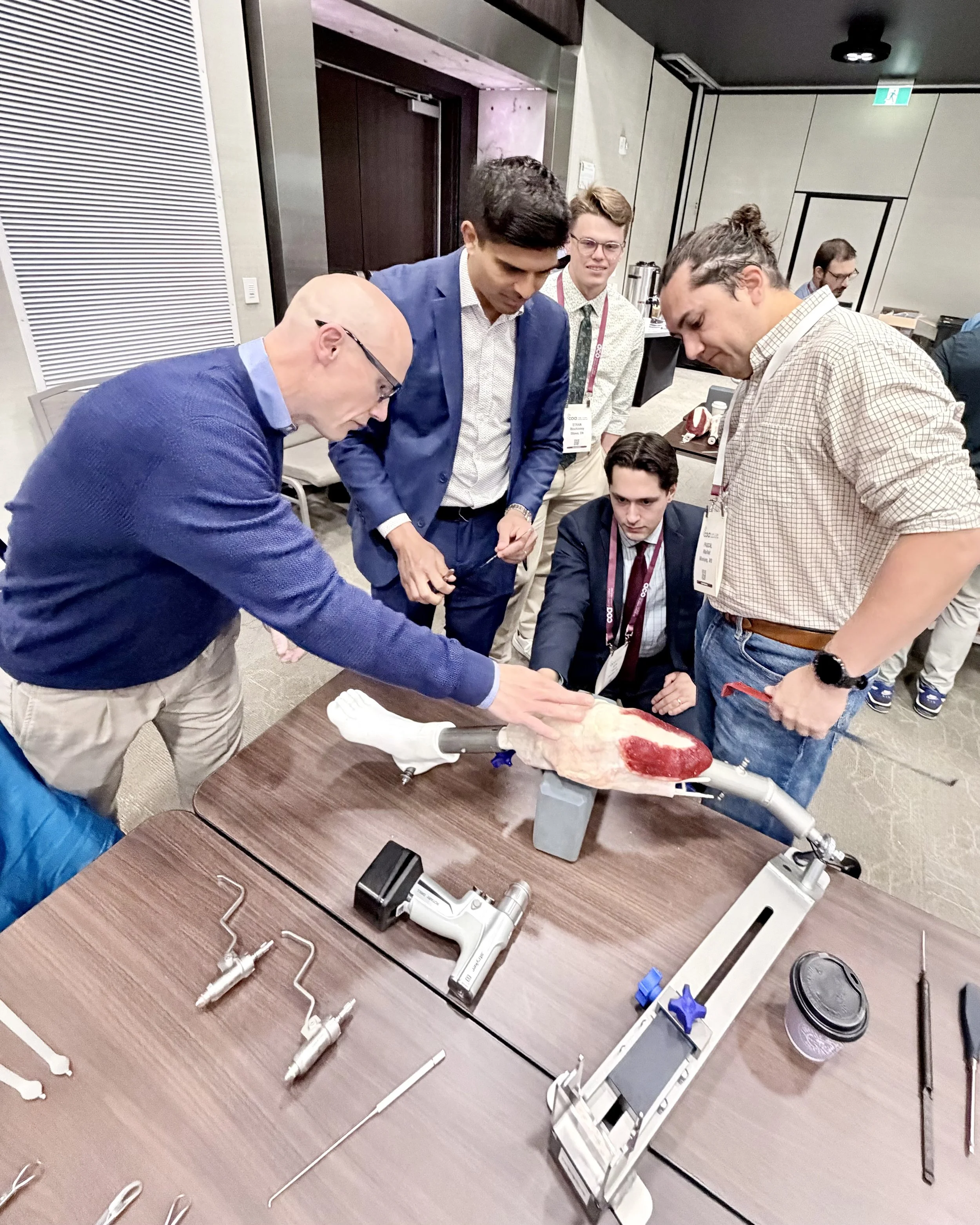
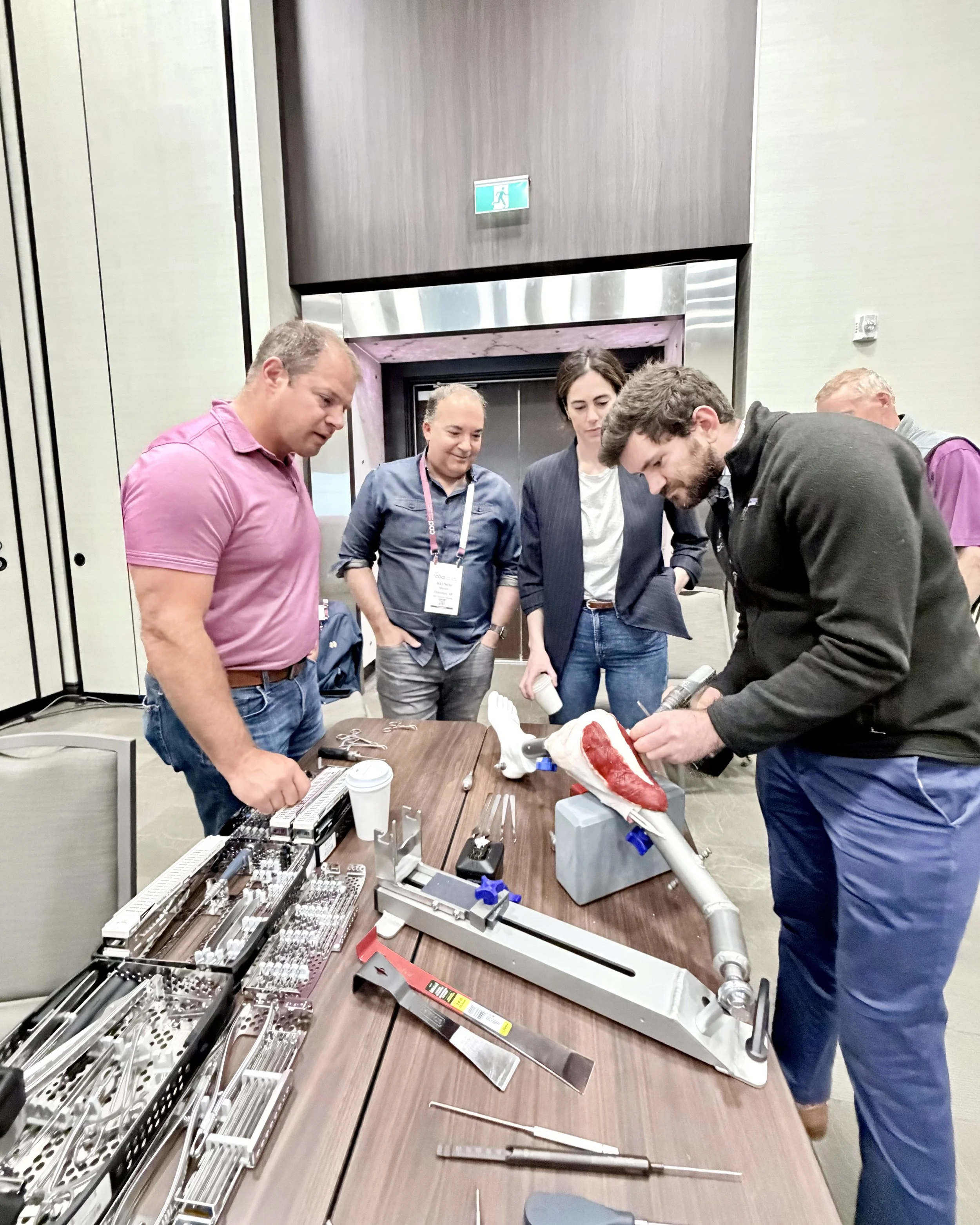
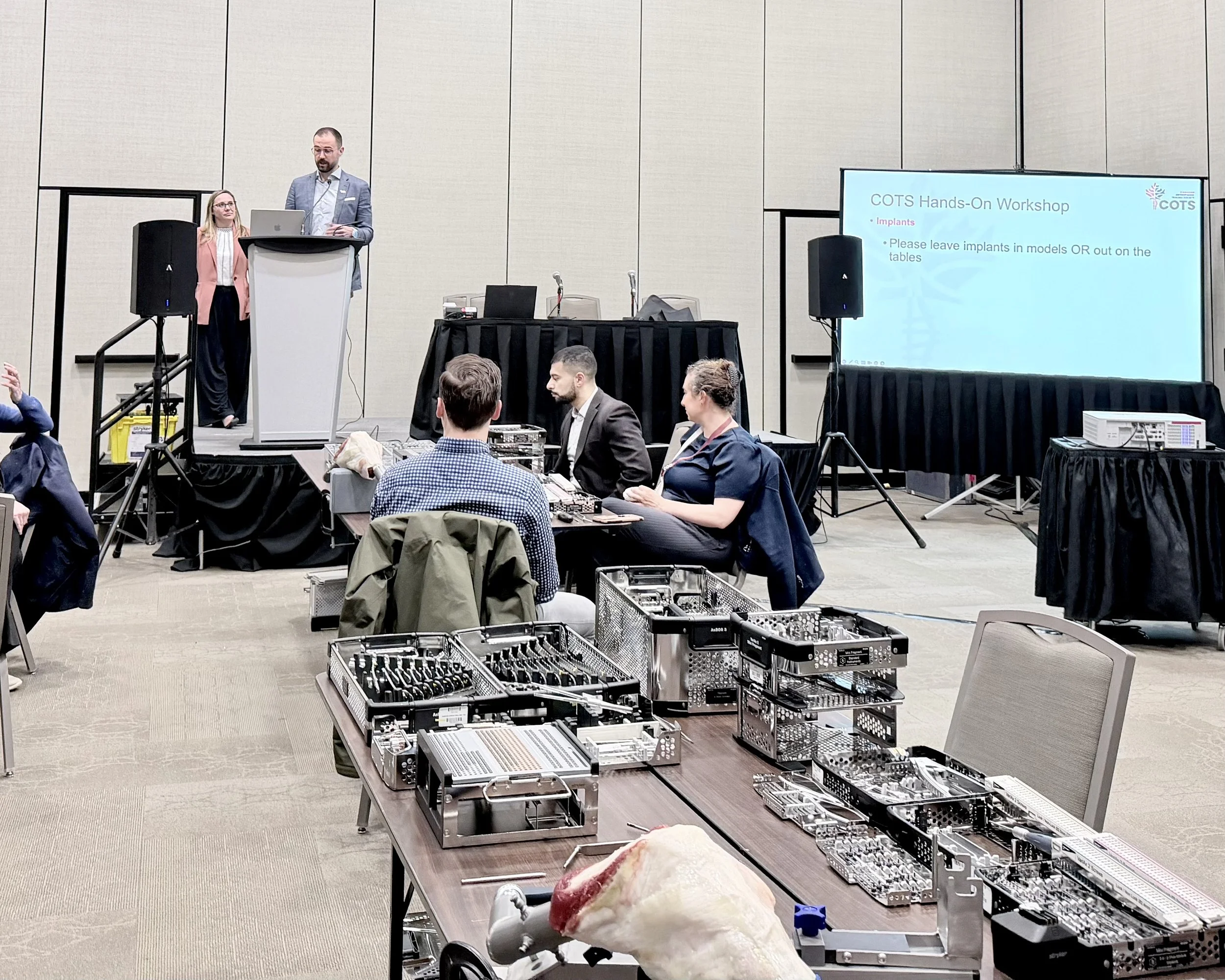
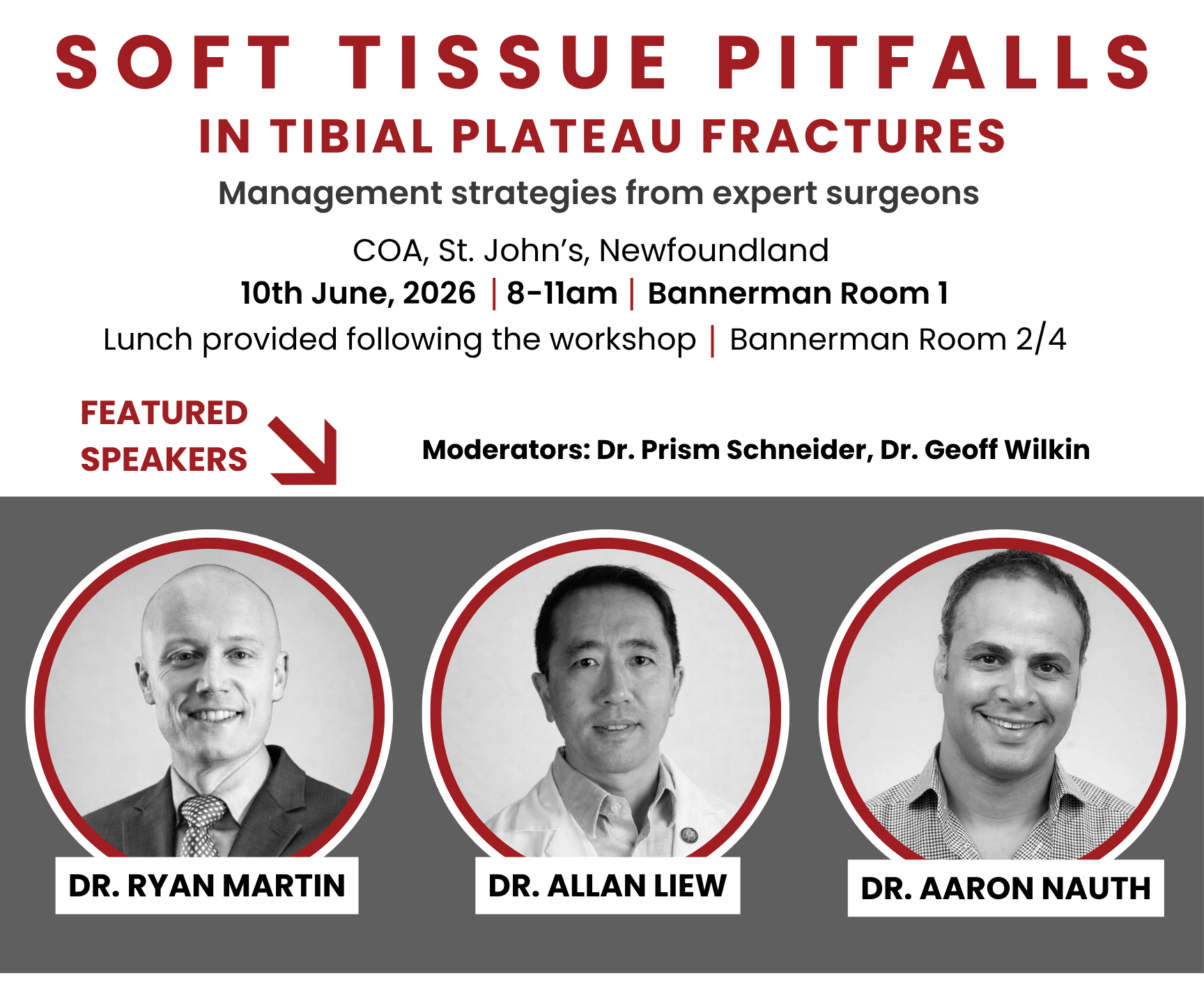
COTS was pleased to host our first ever and highly successful hands-on surgical skills workshop, “Soft Tissue Pitfalls in Tibial Plateau Fractures,” on June 10, 2026, in conjunction with the Canadian Orthopaedic Association Annual Meeting in St. John’s, Newfoundland. The session brought together COTS members and orthopaedic trauma fellows for an interactive morning focused on the recognition and management of soft tissue injuries associated with complex tibial plateau fractures.
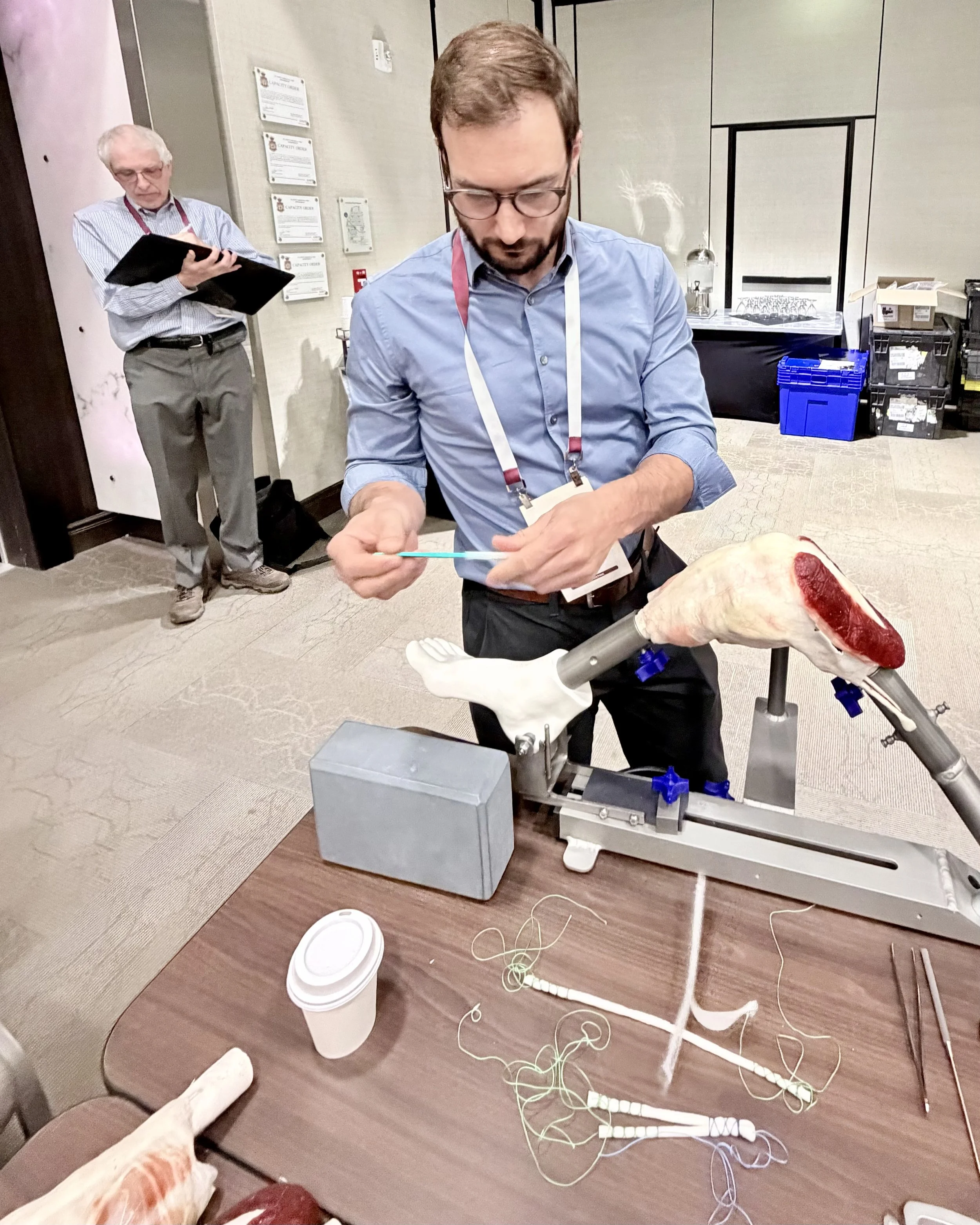
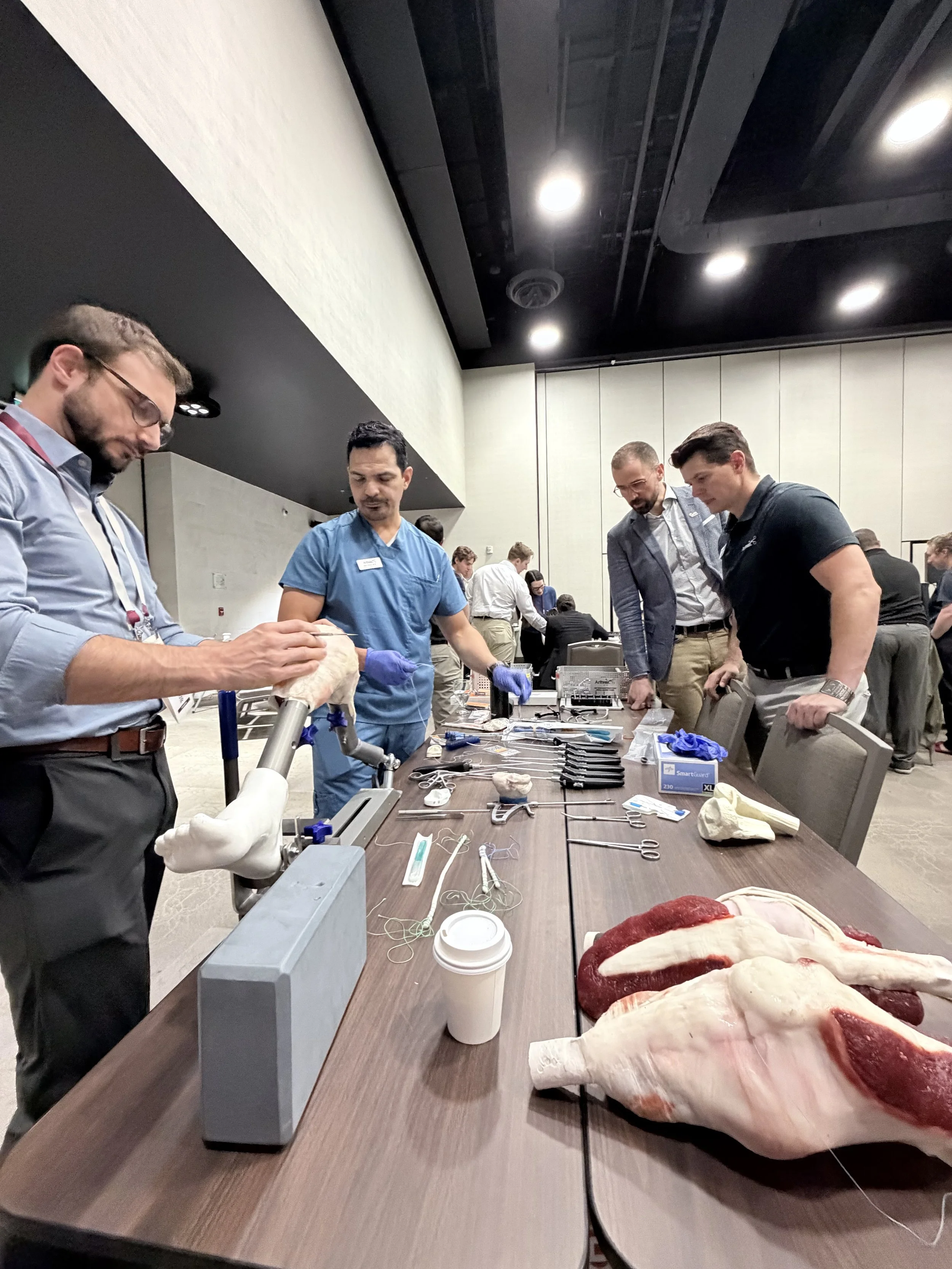
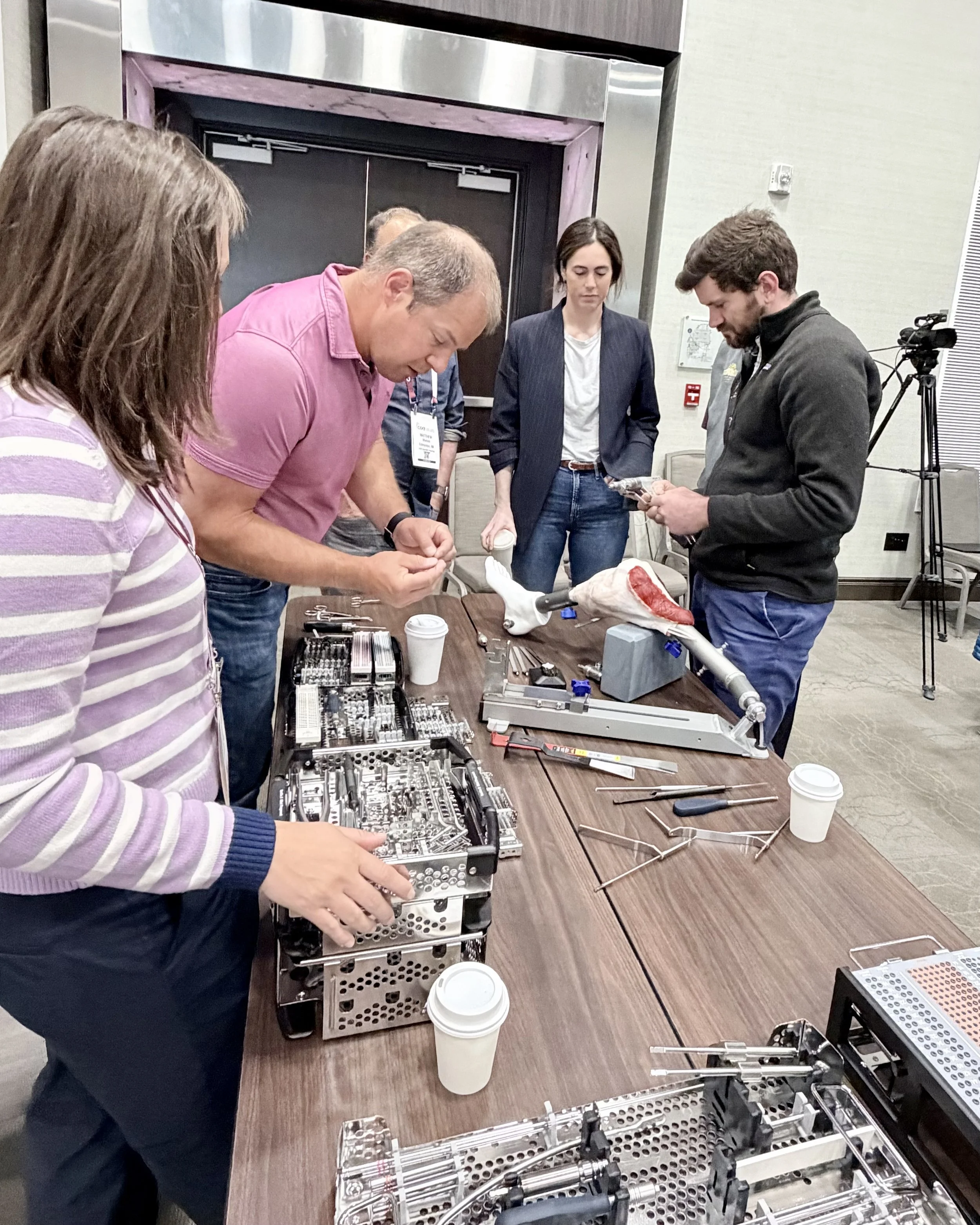
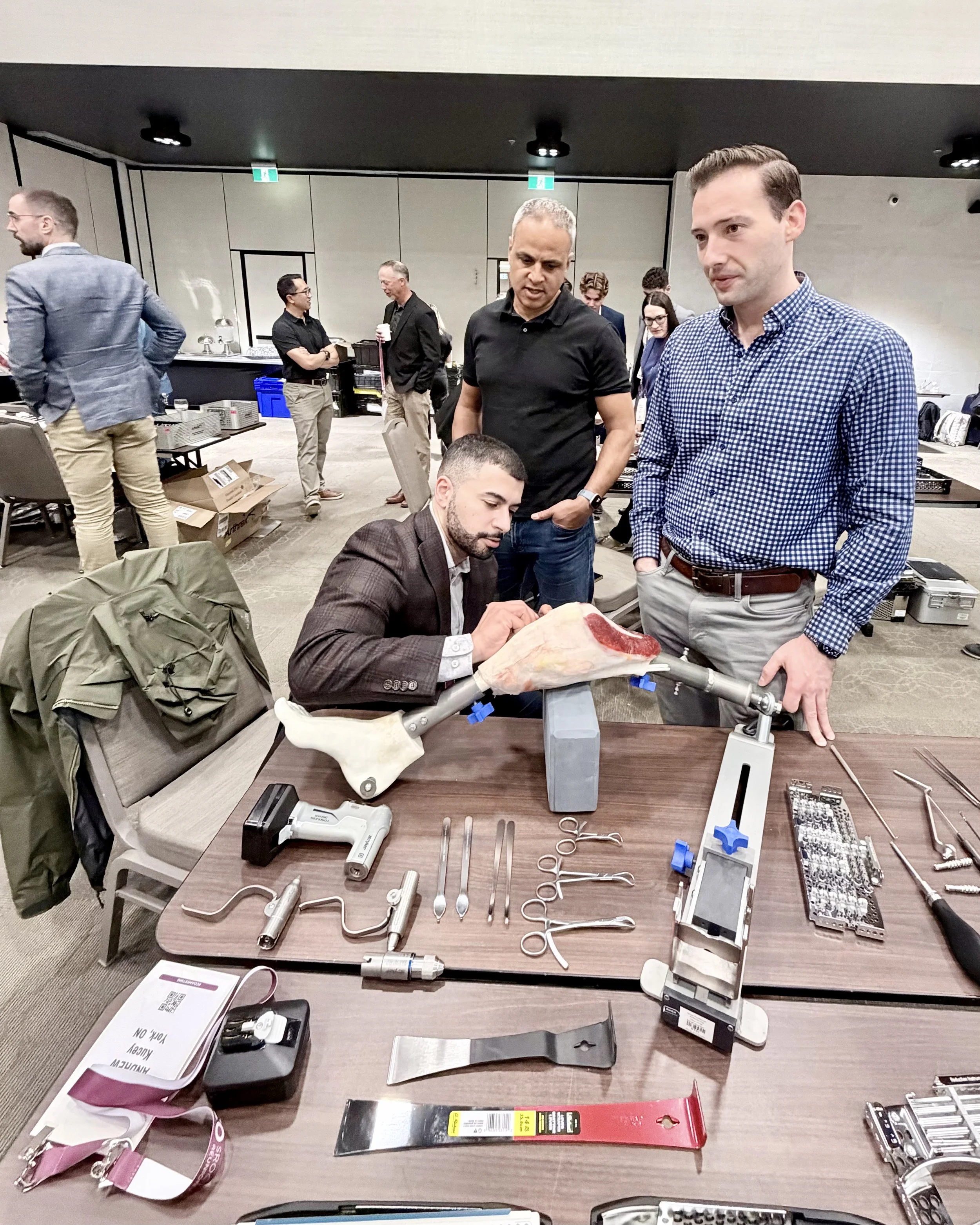
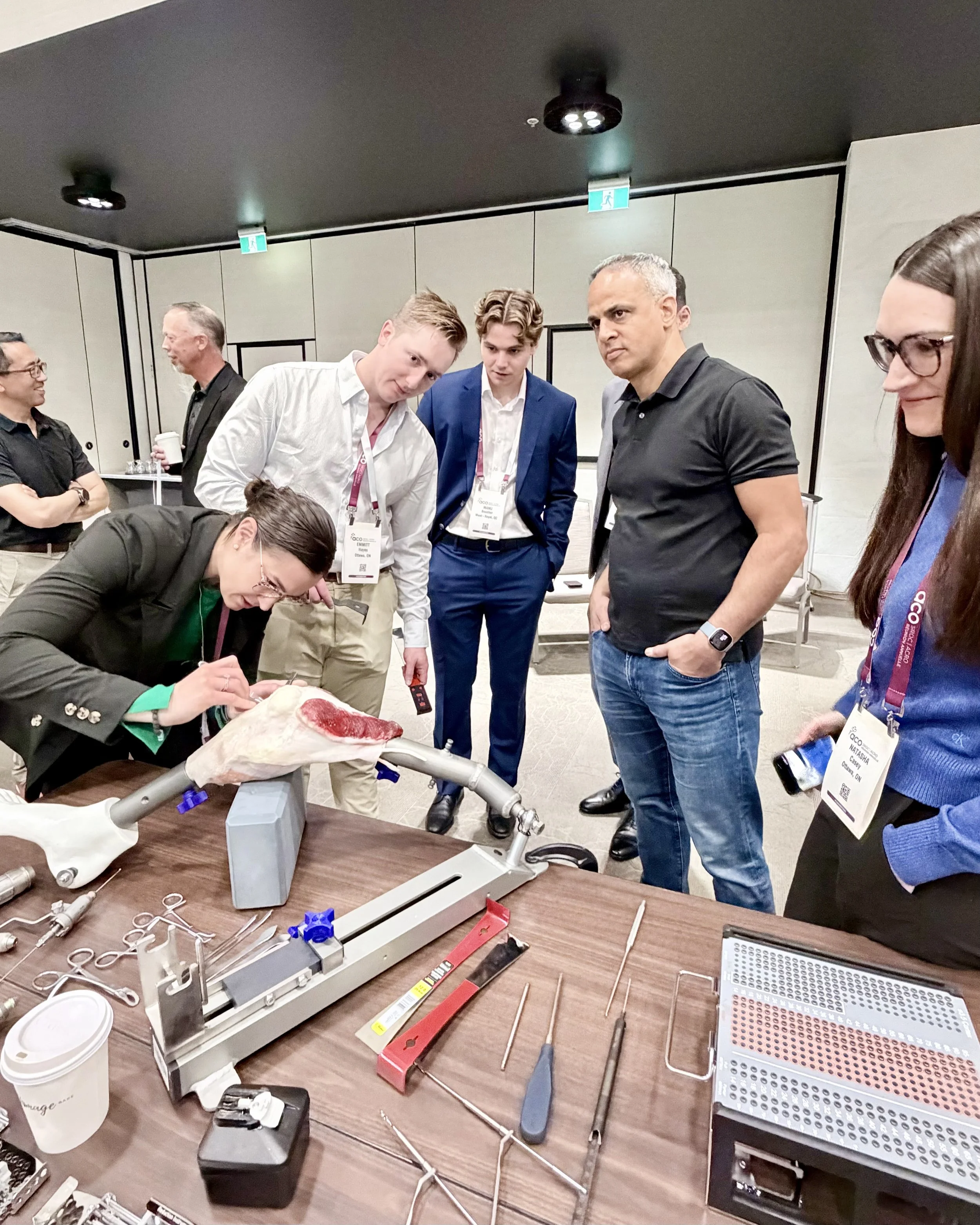
The workshop combined expert discussion with practical, simulation-based learning using high-fidelity Tactile knee models. Participants explored approaches to several challenging injuries that can have an important impact on treatment planning and outcomes, including meniscal incarceration, posterior cruciate ligament (PCL) avulsion, and anterior cruciate ligament (ACL) avulsion.
Dr. Prism Schneider and Dr. Geoff Wilkin moderated the session, guiding discussion and facilitating an exchange of experiences and perspectives among attendees. Featured speakers Dr. Ryan Martin, Dr. Allan Liew, and Dr. Aaron Nauth shared practical tips, surgical strategies, and lessons from their clinical experience, creating an engaging environment for discussion and hands-on learning. One of the highlights of the workshop was the opportunity for participants to translate these discussions directly into practice using the high-fidelity knee models. Attendees were able to work with implants, including plates and screws, as well as suture devices for soft tissue techniques. Post-workshop feedback strongly supported the value of this format: all respondents identified the ability to use implants and suture devices as advantages of the models, while 89% found the models anatomically realistic.
The workshop attracted participants across a range of career stages and levels of experience, from residents and fellows to surgeons with more than 10 years in practice. Importantly, every respondent reported learning something from the session, with 38% indicating that they had both gained new conceptual knowledge and learned a new skill. Nine in ten respondents said they were very likely to implement something they learned in their training or clinical practice.
Feedback on the overall experience was equally encouraging: 100% of respondents said they would definitely recommend the workshop to others. Participants particularly valued the opportunity to interact directly with faculty and learn practical tips from experienced surgeons. Suggestions for future sessions included providing additional hands-on time and extending the overall workshop, reinforcing the enthusiasm for this style of interactive education.
We are grateful to our faculty, moderators, participants, partners, and supporters for contributing to the success of the event. The combination of strong participation, practical skills training, and overwhelmingly positive feedback demonstrates the value of bringing the orthopaedic trauma community together for focused, hands-on education. We look forward to building on what we learned in St. John’s as we plan future COTS educational initiatives.